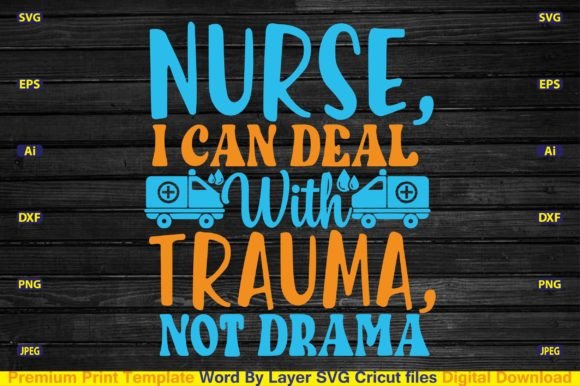
Nurse, I Can Deal with Trauma, Not Drama: A Designer’s Review
As a designer who spends more time analyzing stitch paths than scrolling through social media, I approach every new machine embroidery design with a critical eye. We have all seen the surge in medical-themed apparel, but few designs balance humor and professionalism as effectively as Nurse, I Can Deal with Trauma, Not Drama. This piece is not just another trendy slogan; it is a statement of resilience that resonates deeply with healthcare workers. When evaluating this file for real-world application, my focus shifts from aesthetic appeal to technical execution. How does it hold up under the needle? Does it translate well across different fabrics? And perhaps most importantly for my fellow Etsy sellers and craft business owners, does it add genuine value to a finished product?
First Impressions: Mood and Visual Personality
The immediate impact of Nurse, I Can Deal with Trauma, Not Drama is its bold, no-nonsense attitude. The typography typically associated with this phrase is clean, legible, and assertive, which is crucial for embroidery. In the realm of Graphics and digital downloads, clarity is king. If the letters are too thin or the spacing too tight, the thread will bridge gaps and ruin the readability. From a design perspective, this layout feels intentional. It creates a mood of confident competence, making it an ideal candidate for custom apparel intended for nurses, nursing students, or medical staff who appreciate dark humor as a coping mechanism.
The visual personality here is straightforward. It does not rely on overly complex illustrations that might distract from the message. Instead, it leans into the power of text. For an embroidery project, this means the design must rely on perfect kerning and consistent stitch density to maintain its professional look. It feels at home in the Crafts category because it bridges the gap between simple DIY projects and boutique-quality merchandise.
Real-World Application: From Sweatshirts to Tote Bags
To truly test the viability of this design, I imagined applying it to several common items in my workshop. The most natural fit is undoubtedly sweatshirt embroidery. A heather grey or navy crewneck provides the perfect canvas for white or light-colored thread, ensuring high contrast and maximum readability. The sturdy fabric of a sweatshirt supports the weight of the stitching without puckering, assuming the correct stabilizer is used.
I also considered this design for a heavy-canvas tote bag design. Nurses carry a lot of gear, and a durable tote with this slogan serves both as a functional item and a badge of honor. However, when moving to lighter fabrics, such as a standard cotton t-shirt, caution is required. The density of the text needs to be balanced so that it does not distort the lightweight material. For a personalized gift, such as a scrub cap or a small embroidered patch, the scale becomes critical. If the design is shrunk too much for a small hoop, the finer details of the letters may merge, losing their sharpness.
Another interesting application is in holiday embroidery gifts. During Nurse’s Week or Christmas, a mug rug or a kitchen towel featuring this quote could be a hit. However, towels have a looped texture that can interfere with stitch clarity. In such cases, a cut-away stabilizer is non-negotiable to keep the design flat and crisp against the textured background.
Technical Considerations and Stitching Clarity
When working with text-based designs, the choice between satin stitch and fill stitch defines the outcome. For Nurse, I Can Deal with Trauma, Not Drama, I recommend using satin stitches for smaller text elements if the design allows, as they provide a shiny, premium finish. Larger letters may require a fill stitch to prevent excessive thread buildup. The key is managing stitch density. Too dense, and the fabric will pucker; too sparse, and the backing fabric will show through, ruining the professional appearance.
Fabric texture plays a significant role here. On smooth fabrics like polyester scrubs or high-thread-count cotton, the design will look sharp and defined. On textured fabrics like fleece or terry cloth, the stitches may sink in. To combat this, I always advise using a topping or water-soluble stabilizer on top of the fabric. This keeps the stitches sitting on the surface rather than disappearing into the pile.
Dark fabrics present another challenge. If you are embroidering on black scrubs, you must ensure your thread colors offer sufficient contrast. White, silver, or bright neon threads work best. Always test the design on a scrap piece of the same fabric before committing to the final handmade product. This simple step saves time, materials, and client trust.
Commercial Viability for Small Shops
For small shop product creators and commercial embroidery professionals, this design offers strong market potential. It taps into a specific niche with high emotional engagement. Nurses love to identify with their profession, and this slogan validates their daily experiences. When listing this as a digital embroidery file or selling finished items, highlight the versatility of the design. Show mockups on various items—caps, aprons, pillows—to demonstrate its adaptability.
However, licensing is paramount. Since this is a digital download, likely including SVG files for cutting machines as well as embroidery formats, you must confirm the license terms. Can you sell physical items made with this design? Can you use it in printable mockup previews? Always check the specific terms provided by the creator. Assuming commercial use is allowed, this design can become a staple in your design assets library, driving consistent sales for your craft business.
Practical Designer Notes for Best Results
- Test on Scrap Fabric: Never skip this step. Check for puckering, thread breaks, and color accuracy.
- Check Hoop Size: Ensure the design fits comfortably within your hoop with adequate margin for stabilization.
- Review Stitch Density: Adjust density settings if your machine allows, especially for stretchy fabrics.
- Contrast is Key: Use light threads on dark fabrics and vice versa to maintain readability.
- Stabilizer Selection: Use cut-away stabilizer for stretchy knits and tear-away for stable wovens.
- Inspect Small Details: Zoom in on your digitizing software to check for overlapping stitches or unnecessary jumps.
- Verify Licensing: Confirm whether the file permits commercial sales of finished goods before listing them.
In conclusion, Nurse, I Can Deal with Trauma, Not Drama is a robust, versatile design that performs well when treated with technical respect. It is not just a graphic; it is a tool for connection. By paying attention to fabric choice, stabilizer type, and stitch quality, you can transform this digital file into a high-value embroidery project that customers will cherish. Whether you are creating a baby embroidery item for a nurse’s newborn or a rugged patch for a trauma unit, this design delivers impact. Treat it with the precision it deserves, and it will elevate your portfolio.